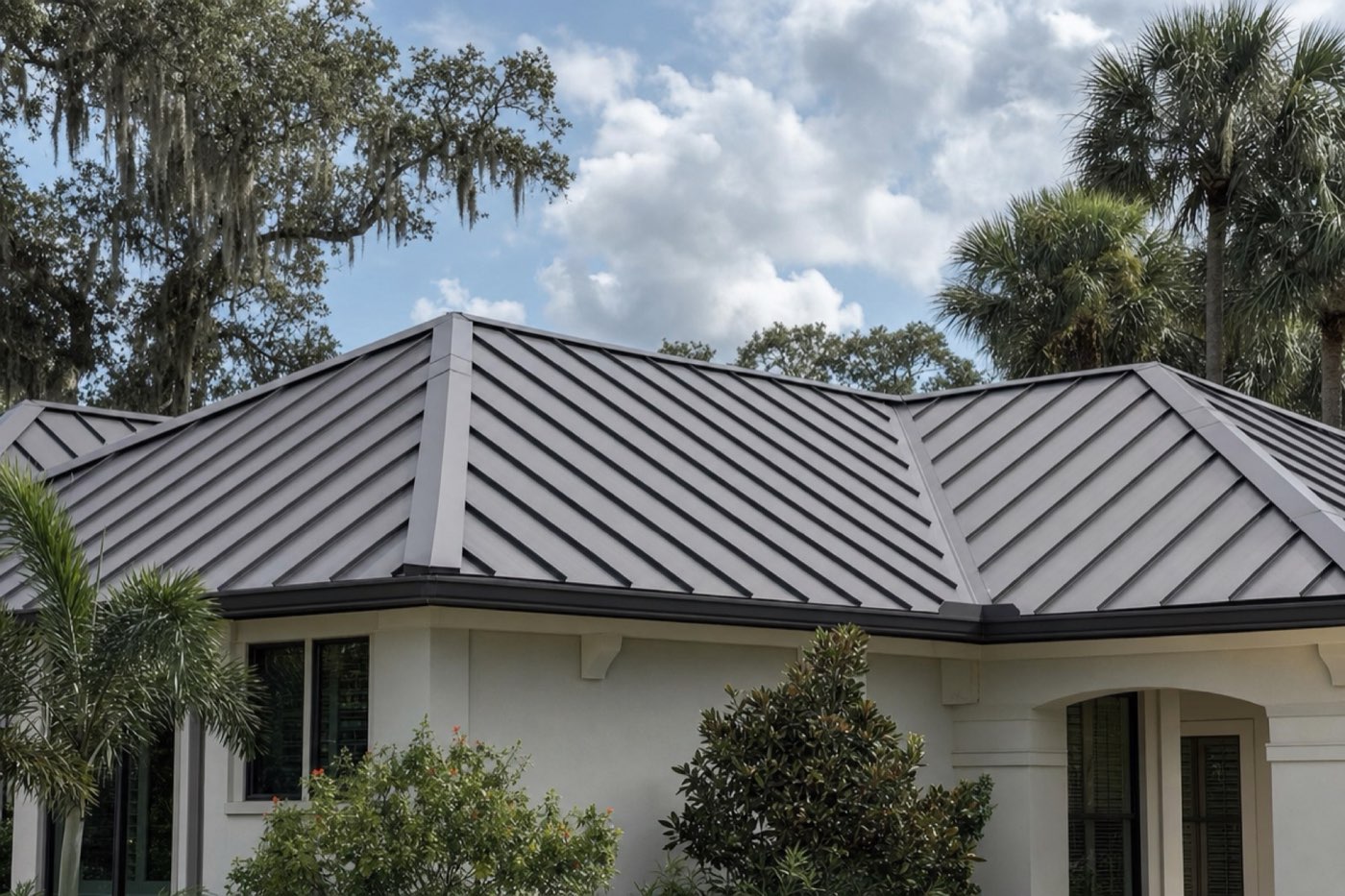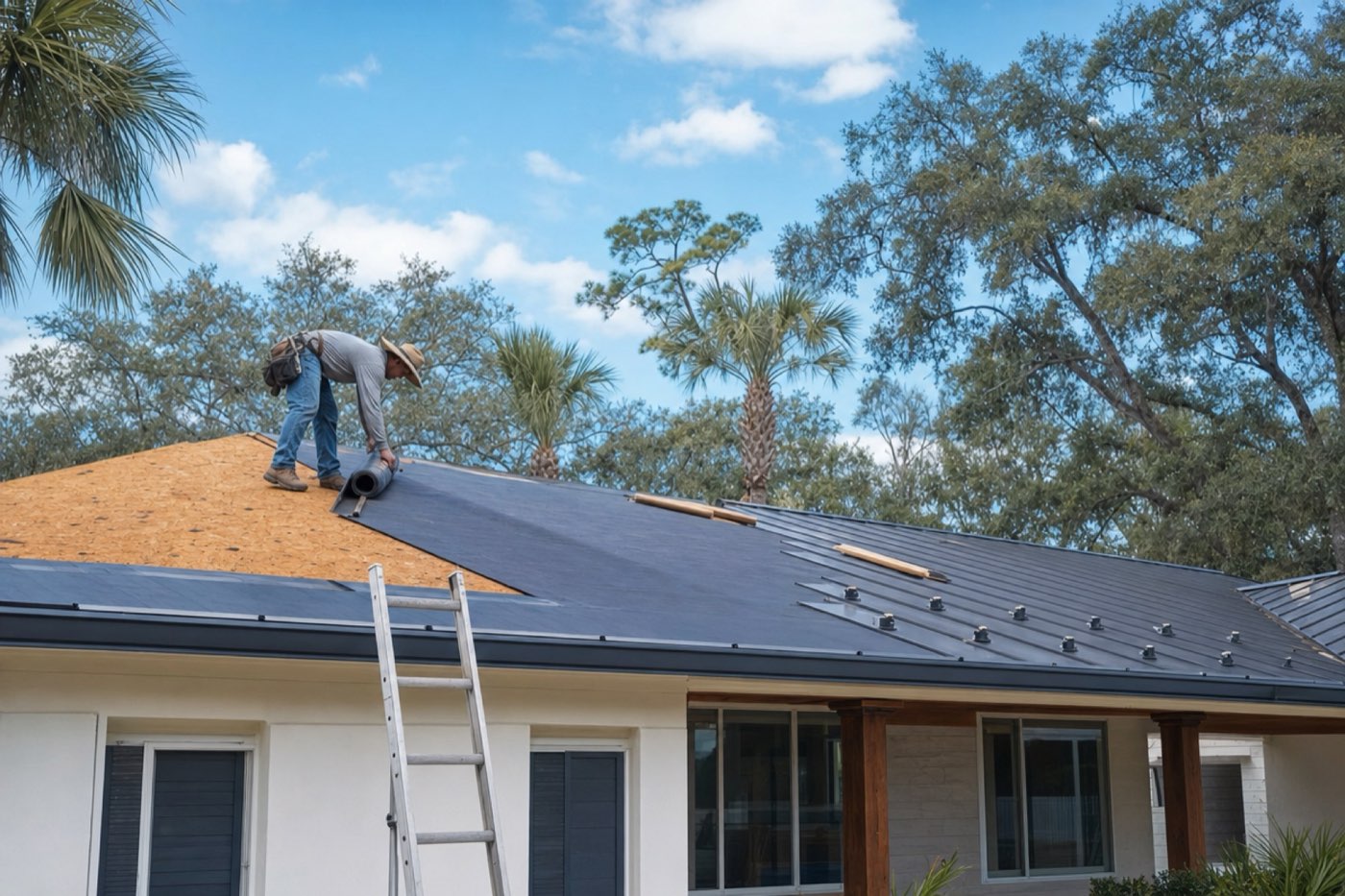
Yes. For a metal roof in Jacksonville, ask your contractor for a high-temperature, self-adhering (peel and stick) underlayment rated for at least 239°F, covering the full roof deck. Manufacturers make these membranes for use under metal roofing, with ratings that run up to 260°F, and your contractor confirms what the panel maker and the code require for your specific roof.
What temperature ratings do high-temp underlayments carry?
Ratings vary by product, but they cluster in a range well above what you would expect for a typical roofing layer. Here is what three manufacturers publish:
| Manufacturer | Published figure | Metal roof use |
|---|---|---|
| Taylor Metal / Malarkey (TMP Protect HT) | Rated up to 260°F | Suitable beneath metal roofing |
| Metal Sales (ms-HT) | Rated up to 239°F surface temperature | Can be used under metal roofing |
| Englert (MetalMan HT) | Intended for climates where roof surfaces can reach 240°F | Made for metal roof assemblies |
The Metal Sales information sheet gives the 239°F surface-temperature rating. The Taylor Metal technical data sheet lists the 260°F figure and identifies the product as suitable beneath metal roofing.
Why do metal roofs call for a high-temperature membrane?
The underlayment sits directly beneath the panels, so it lives in the heat the metal passes down to it. Englert describes its high-temperature underlayment as intended for extremely hot climates where roof-surface temperatures can reach 240°F.
A Florida roof in July belongs in that conversation. That is why the practical rule is simple: pick a membrane whose published rating is made for metal roofing, not one chosen only for price.
How does peel and stick protect against wind-driven rain?
A metal roof sheds water at the panel surface, but the underlayment is the layer beneath it. Englert describes its membrane as self-sealing and as providing waterproof protection before, during, and after metal-roof installation. That matters in Jacksonville, where a storm can arrive while panels are still going on.
Henry's technical data sheet states that its high-temperature membrane is intended as a full-coverage waterproofing layer in architectural metal roof assemblies. Taylor Metal's data sheet goes further and recommends complete roof-deck coverage under metal roofing, specifically naming wind-driven rain and extreme temperatures as relevant conditions.
Put those together and you get a clear picture. The panels are your first line of defense, and a full-coverage, self-adhering membrane is the second layer under them.
What does the 9th Edition Florida Building Code change?
The upcoming 9th Edition of the Florida Building Code includes underlayment language you should know about. The Florida Building Commission's analysis of the 9th Edition changes says one underlayment provision requires a minimum six-inch lap over hips and ridges, subject to an exception for ventilation openings.
For you, the takeaway is about detailing. Hips and ridges are where water gets in during wind-driven rain, and the code is paying attention to how underlayment is lapped there.
Which code edition applies to your job depends on when the permit is issued and on the roof design. Our page on permits and wind code for Jacksonville roofs explains how that works, and your contractor should tell you which edition their permit package follows.
What should the installation look like?
Use this as a checklist when you review a proposal:
- Full deck coverage. Taylor Metal recommends complete coverage, not partial strips along eaves and valleys.
- Applied to the deck. Henry states its high-temperature membrane may be installed directly on roof decks before the finished metal covering.
- Correct installation temperature. Henry's installation data requires suitable temperatures for the membrane to adhere, so a cool morning can affect scheduling.
- Six-inch lap at hips and ridges. This is the minimum in the 9th Edition analysis, with an exception for ventilation openings.
- A named product with a published rating. The proposal should say which membrane is going down, not just "underlayment."
What does Jacksonville require for the permit?
Roofing work that needs a permit is the owner's responsibility to obtain, or to have obtained by the licensed contractor, according to the City of Jacksonville Building Inspection Division. The city also states that starting work before applying is unlawful and may result in a $250 fine.
As of October 2026, the city's published fee schedule lists minimum roofing permit fees of $80 when no inspection is required and $150 when one or more inspections are required. Jacksonville says online electronic submission is required for all permit types, so your contractor files the package online.
What should you ask a contractor before signing?
- Which high-temperature, self-adhering underlayment will you use, and what is its published temperature rating?
- Will it cover the entire deck, and how will you lap it at hips and ridges?
- Who pulls the permit, and which Florida Building Code edition applies?
- Does the panel manufacturer's instruction call for anything beneath the panels, such as battens or ventilation channels?
The same questions apply whether you choose standing seam metal roofs in Jacksonville or another profile. For help comparing bids, read our page on choosing a licensed metal roofing contractor.
Call (904) 720-8470 or send a request and we will connect you with a licensed local roofing contractor. Metal Roofer Jacksonville is a free referral service, and the contractor you meet does the work.