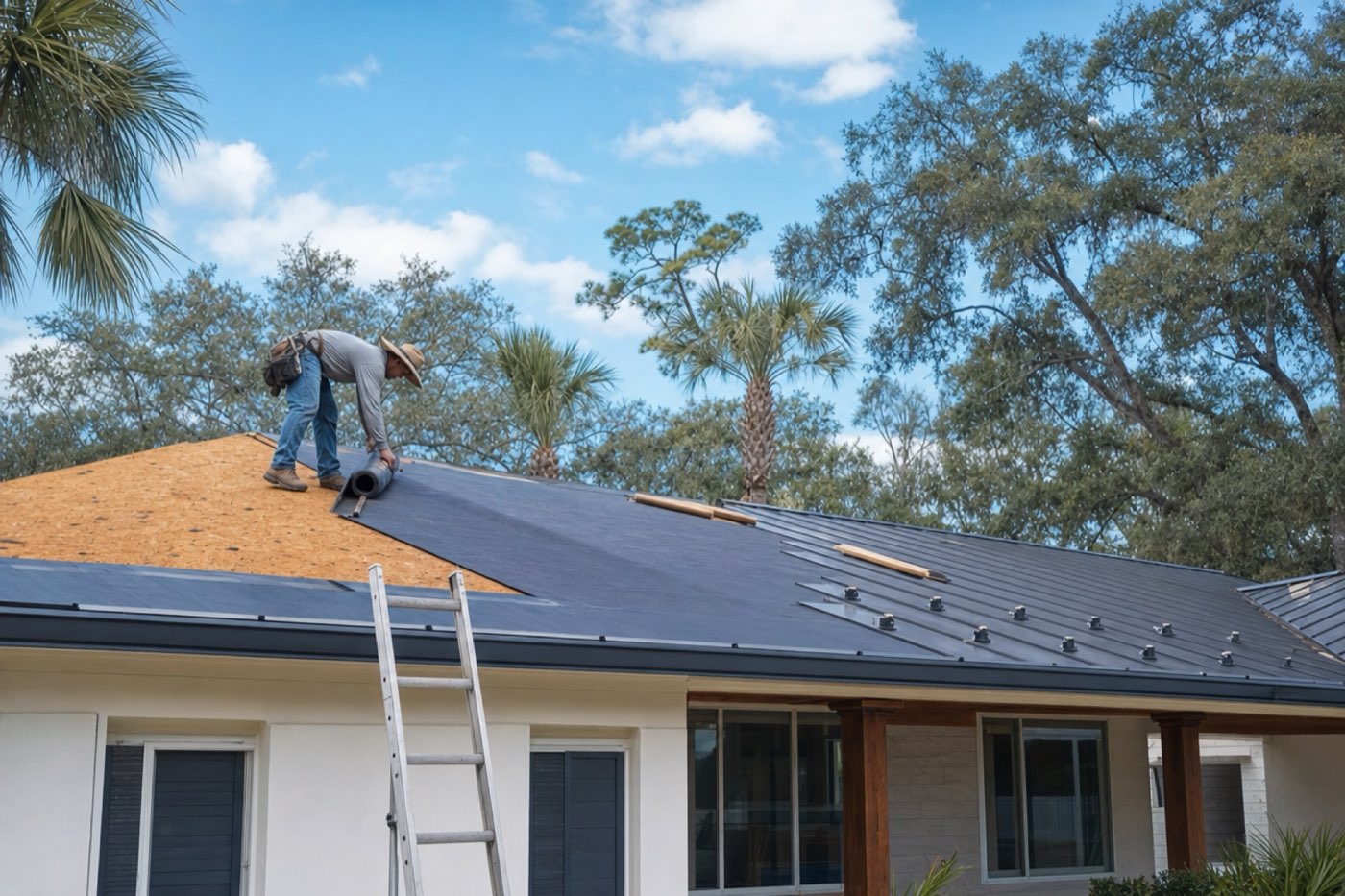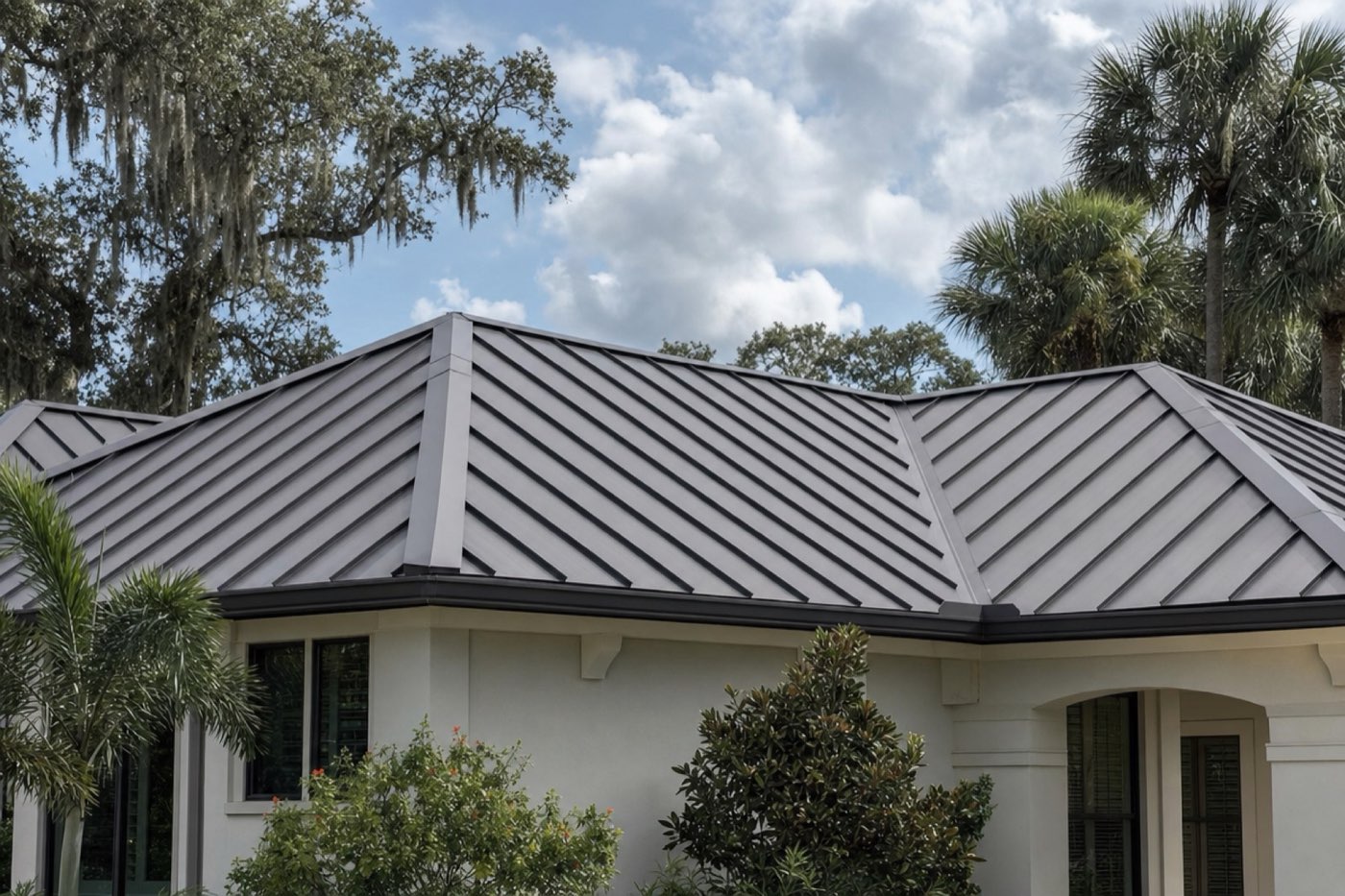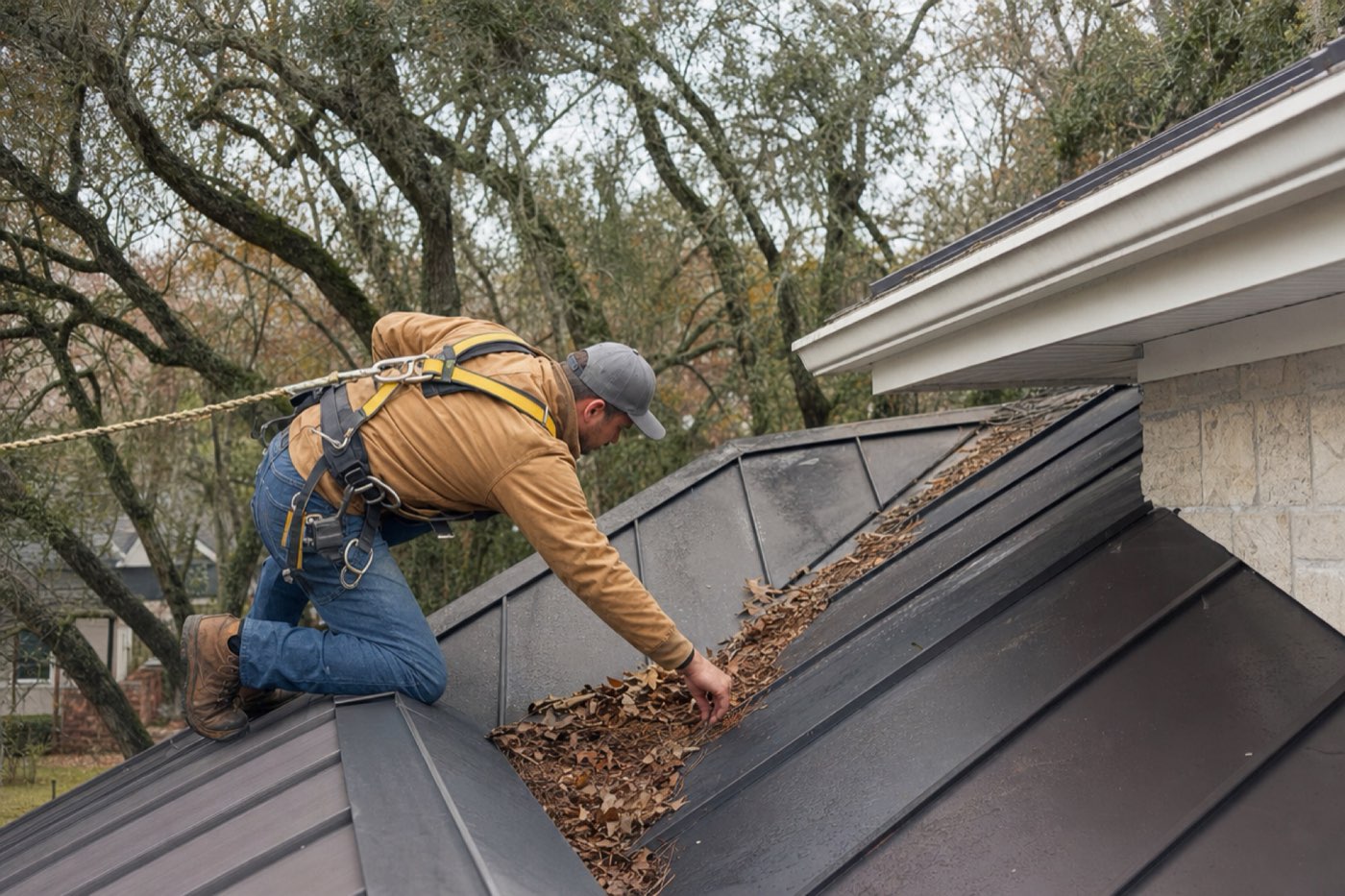
In Florida, an open valley lined with exposed metal must be at least 16 inches wide, with flashing reaching at least 8 inches from the centerline on each side and sitting on 36-inch-wide underlayment. To fix a leaking valley in Jacksonville, a licensed contractor finds where the water actually gets in, replaces damaged valley metal or underlayment to those dimensions, and laps and seals joints at least 4 inches. Late October, with fall nor'easters and heavy leaf drop, is the time to clear and check your valleys.
What is the minimum valley flashing width in Florida?
The Florida Residential Code, Chapter 9, sets the minimum for open valleys lined with exposed metal at 16 inches. The same chapter says valley flashing must extend at least 8 inches from the centerline on each side and include a 3/4-inch splash-diverter rib.
The 2023 Florida Building Code, Chapter 15, carries the same 16-inch figure for the applicable roof-assembly provision.
Panel makers can ask for more. One manufacturer's installation instructions filed with the Florida Building Commission give an installation minimum of 12 inches on each side of the valley, which is 24 inches overall. They also say the valley width must comply with local building codes. When the two numbers differ, the larger one is the safer target.
| Requirement | Minimum |
|---|---|
| Open valley lined with exposed metal | 16 inches wide |
| Flashing extension from centerline | 8 inches each side, plus a 3/4-inch splash-diverter rib |
| Manufacturer installation minimum (one filed instruction) | 12 inches each side |
| Underlayment under metal valley flashing | 36 inches wide |
| End lap between valley-flashing sections | 4 inches |
What underlayment goes under a metal valley?
Florida code requires a 36-inch-wide underlayment directly beneath metal valley flashing. A Florida Building Commission roofing detail also states that ASTM D1970 material used as valley lining must be at least 36 inches wide.
Where the roof assembly calls for it, the deck must carry approved self-adhering polymer-modified bitumen underlayment. It has to be installed according to both the underlayment instructions and the roof-covering instructions. If a contractor lifts your valley metal and finds torn, missing or narrow underlayment, replacing it to that width is part of a correct repair.
What metal and gauge must valley flashing be?
Valley flashing must be corrosion-resistant metal that matches the roof covering or complies with the applicable code table. The Florida Residential Code also requires metal flashing to be corrosion resistant and to meet the prescribed thickness table or RAS 111.
Gauge therefore depends on the metal and the table that applies to your roof. Ask your contractor to name the metal and thickness they plan to use and which table or standard it meets.
How do you fix a leaking metal roof valley?
A valley leak is not always a valley problem. Water that appears under a valley can come from panel laps, fasteners, sidewall or headwall flashing, damaged underlayment, roof penetrations, condensation or framing movement. The repair starts with finding the real entry point.
- Clear the valley. Remove leaves, pine needles and debris so the metal, seams and fasteners are visible.
- Trace the leak. Check the valley seams and laps, nearby fasteners, adjoining flashings and penetrations, and look for signs of condensation.
- Measure the valley. Compare the existing metal against the numbers above: 16 inches overall, 8 inches from the centerline on each side, and a 3/4-inch splash-diverter rib.
- Replace what fails the check. Damaged, corroded or too-narrow valley metal gets replaced with corrosion-resistant metal that matches the roof covering or meets the code table.
- Rebuild the underlayment if it is damaged. Use a 36-inch-wide layer beneath the valley flashing, installed per the underlayment and roof-covering instructions.
- Lap and seal the joints. Valley sections need at least a 4-inch end lap, sealed with an approved sealant and adhesive.
The manufacturer's installation instructions say overlapping metal valley pieces must have at least a 4-inch overlap and be sealed with an approved sealant and adhesive. The code's valley-flashing end-lap minimum is also 4 inches.
A sealant bead over a worn valley only covers the symptom. If the metal is too narrow, corroded or sitting on failed underlayment, the fix is replacement to the dimensions above.
Which sealant should go on valley laps?
Use the sealant and adhesive your panel manufacturer approves, because that is what the installation instructions call for at valley laps. Ask your contractor to name the exact product and confirm that it is approved for your panel type and finish.
Sealant works at laps and joints that already meet the width and overlap numbers. It does not make up for a valley that is too narrow or lapped less than 4 inches.
When should you clear and check your valleys?
Late October is the right window in Jacksonville. Fall nor'easters arrive and leaf drop is heavy, so debris collects in valleys just as the heaviest rain is likely.
Clear loose leaves and pine needles before the next forecast storm, and have a licensed contractor look at any valley that shows staining, rust, lifted seams or ceiling spots below. Roof surfaces are slick when wet, so leave work on the roof itself to a professional.
Our page on metal roof repair in Jacksonville explains what a repair visit typically covers. If your roof is standing seam, the same valley principles apply to standing seam metal roofs, though panel manufacturers publish their own valley details.
Does a valley repair need a permit or a code check?
Code editions and local amendments change, and the edition that governs a job depends on the permit date. As of October 2026, ask your contractor which Florida Building Code edition applies to your repair and whether the work needs a permit.
Removing panels, replacing valley metal or underlayment, or altering the roof deck is more likely to raise that question than a small sealing repair. Our overview of permits and wind code for Florida roofs covers the basics, and our guide to choosing a metal roofing contractor lists questions to ask before you hire.
If you have a leaking valley or want yours checked before the next nor'easter, call (904) 720-8470 or send a request. Metal Roofer Jacksonville is a free referral service that connects you with a licensed local roofing contractor.