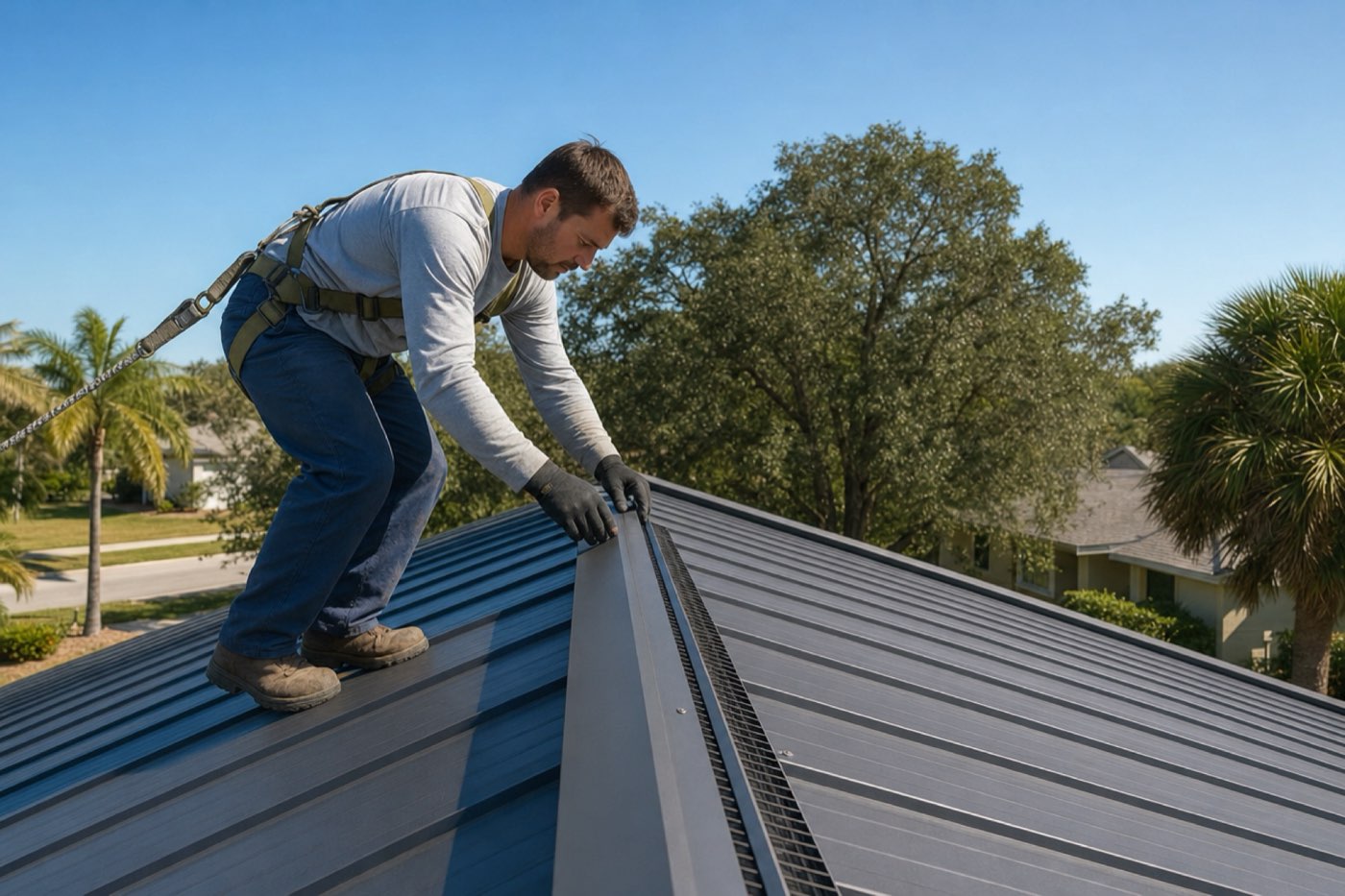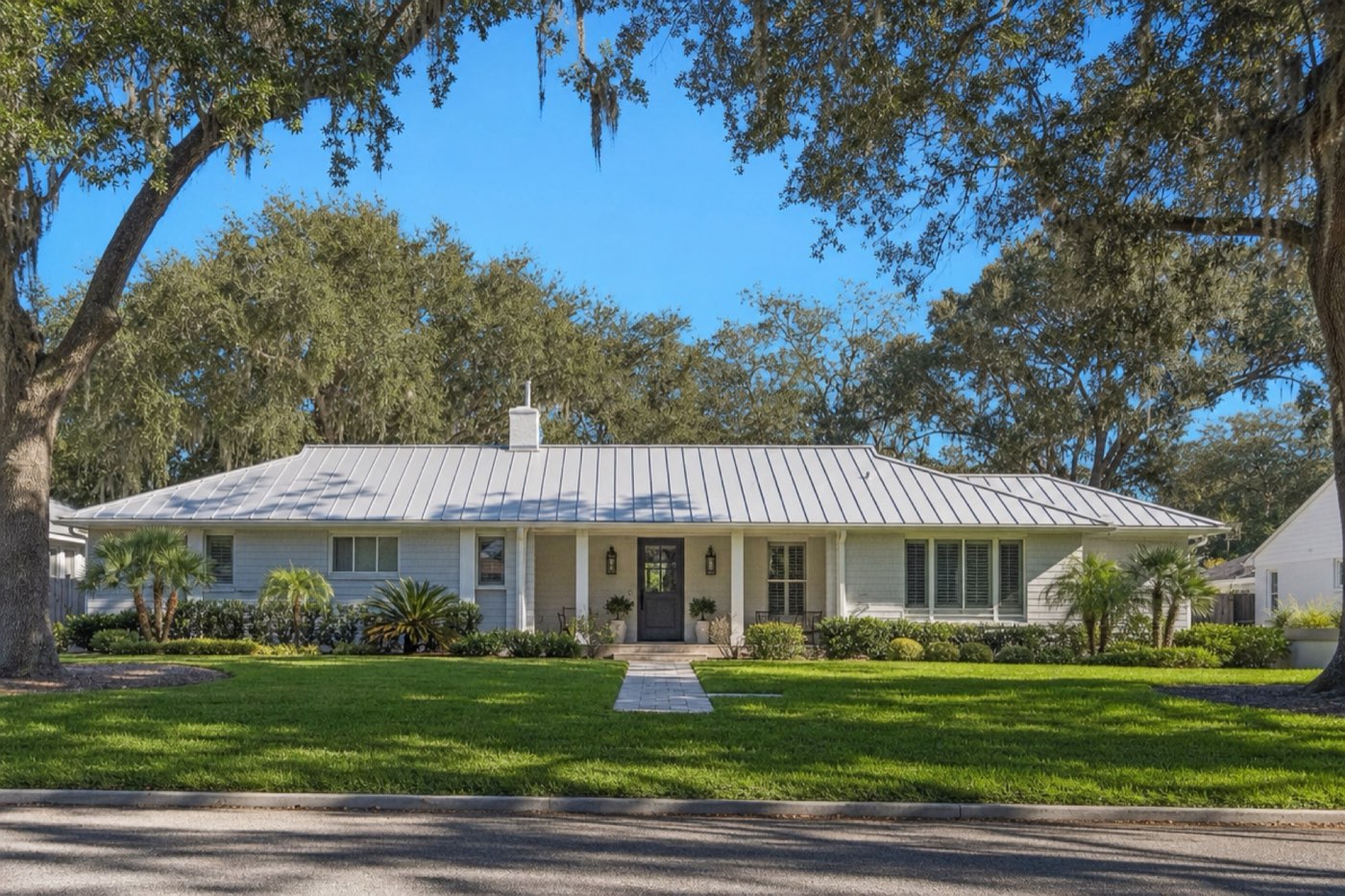
Before you host Thanksgiving in Jacksonville, check five things on your roof: the metal panels, the fasteners, the flashing, the gutters and downspouts, and the valleys. Look for dents, loose screws, worn rubber washers, rust, loose or missing flashing, and debris that blocks water flow. If anything looks wrong, book a licensed roofer before the holiday rather than after guests arrive.
Why check the roof the week of Thanksgiving?
The National Weather Service Jacksonville forecast called for partly sunny conditions and a high near 67°F on Thanksgiving Day. That is a good window for a quick look, because you are not checking in the rain or the summer heat.
The same agency also reported a coastal flood advisory for the Jacksonville area through November 23, 2026. Water management around your house matters this week, and the gutter checks below cover it.
The city also expects you to keep the roof in repair. Jacksonville’s code requires defective or missing roof components to be repaired or replaced as part of exterior-building maintenance.
What should you look for on metal roof panels?
Start with the panels themselves. IBHS, a building-safety research group, says metal panels should be checked for dents or divots, loose screws, deteriorated rubber washers, discolored or worn-off paint, and rusting.
Exposed fasteners deserve extra attention. IBHS notes that rubber gaskets on exposed metal-roof fasteners can deteriorate and the fasteners can back out. A screw that has lifted slightly is an easy repair now and a leak path later.
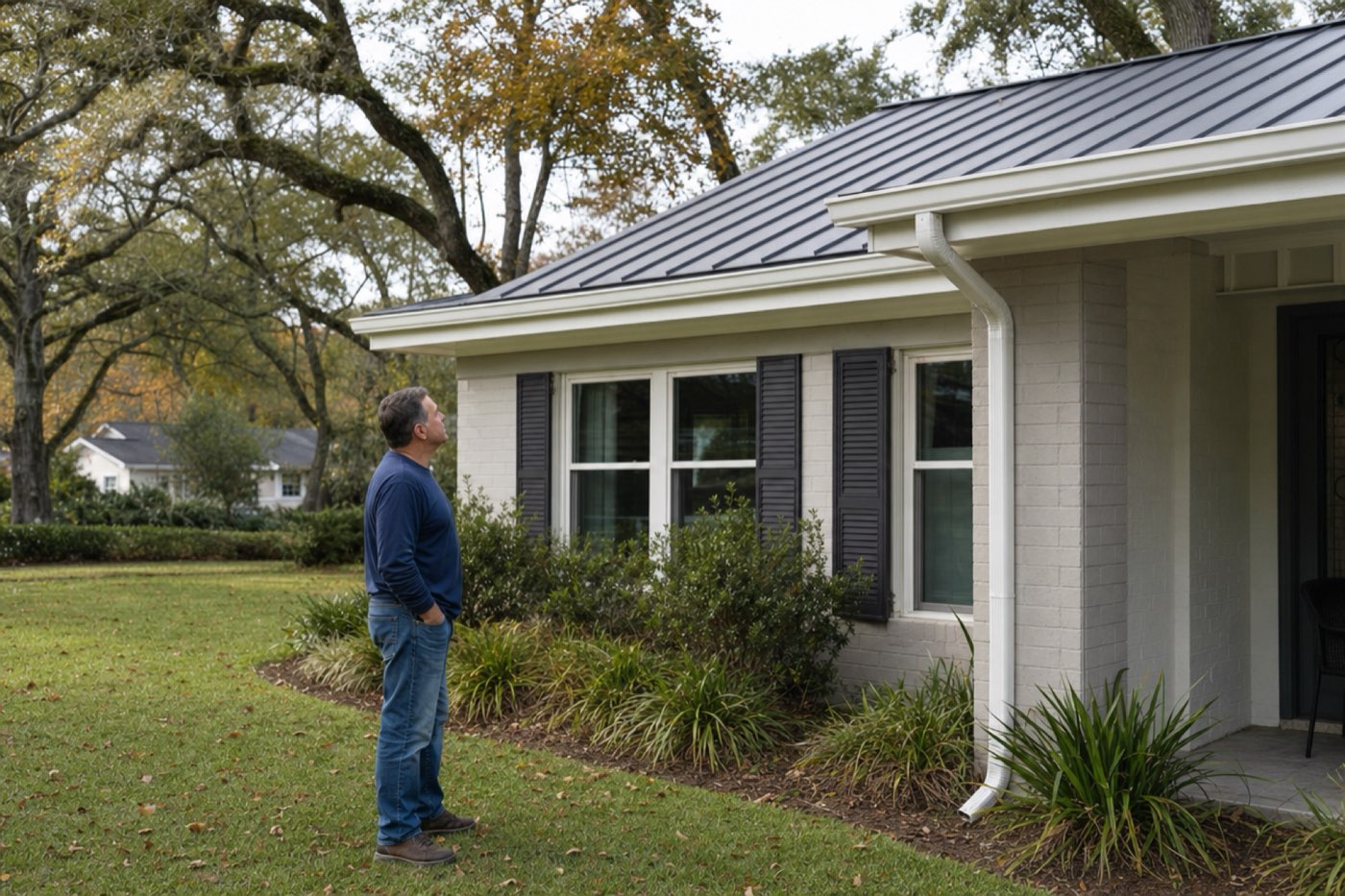
From the ground or a window, scan for these conditions:
- Dents or divots in the panels
- Screw heads that sit high or look crooked
- Cracked, flattened or missing rubber washers
- Peeling, faded or worn-off paint
- Rust streaks or corroded fasteners
Rust, loose screws, corroded fasteners, dents, divots and peeling paint are all conditions to look for during routine maintenance. Note what you see and where, so a contractor can find it quickly.
How do you check flashing and roof openings?
Flashing is the metal trim at roof edges, valleys and anything that pokes through the roof, such as vent pipes. Check it for loose, bent or missing sections, gaps, rust and cracks.
Sealed joints matter too. Cracks, gaps and deteriorating seals around flashing, penetrations, vents, skylights, HVAC equipment and roof edges should be sealed or repaired promptly.
Flashing deserves a look before and after storms, since loose or ill-fitted flashing can contribute to roof-cover failure and water intrusion during high winds. With hurricane season winding down, this is a sensible time to check.
Are your gutters and downspouts ready?
Gutters collect the leaves and pine debris that Jacksonville yards drop in the fall. The building-safety research group recommends cleaning gutters, downspouts and drains of tree debris and vegetation that could restrict water flow.
Then check how the water leaves the house:
- Confirm that downspouts divert water at least 3 to 4 feet away from the foundation.
- Look at how the gutters attach. They should be secured to the house with gutter straps.
- Look for sagging sections, gaps at the joints or pulled-away ends.
With a coastal flood advisory in the area, a downspout that dumps water beside the slab is a problem worth fixing before guests park on the lawn.
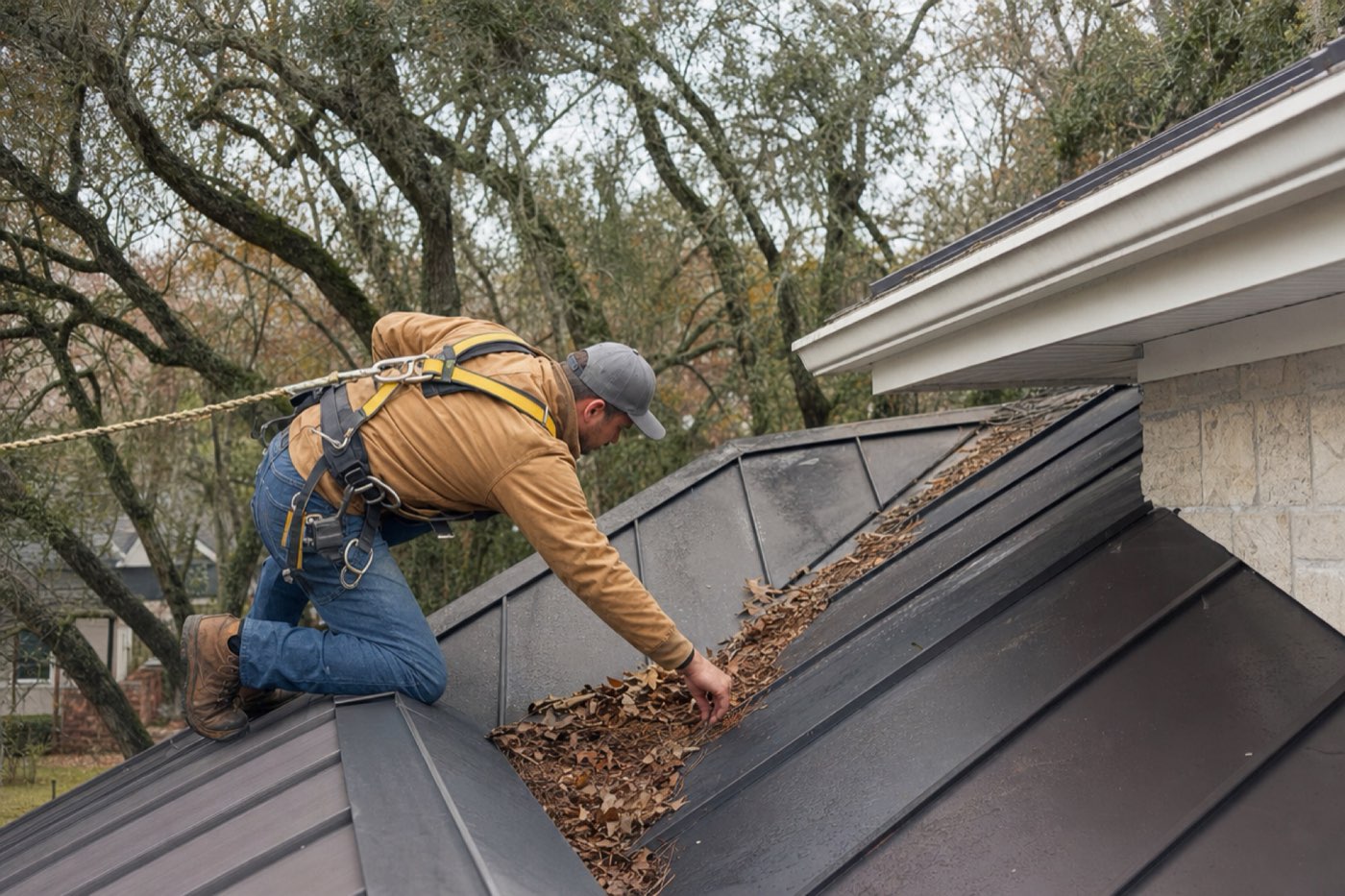
What about valleys and debris on the roof?
Valleys are where two roof slopes meet, and they carry a lot of water. IBHS recommends regularly clearing debris from valleys and the profile of metal roofs. The profile means the ribs and channels of the panel, such as those on a 5V crimp or standing seam roof.
For low-slope metal roofs, maintenance also includes protecting panels from excessive foot traffic, keeping corrosive agents off the panels, restoring sealants around roof openings and keeping the roof free of debris. That is one more reason to avoid walking the roof yourself.
Should you climb up to look?
No, not if the roof is wet, steep or already damaged. Everything above can be spotted from the ground, a second-story window or the edge of a safe ladder position. Anything that needs real roof access belongs to a professional.
IBHS recommends a professional roof inspection once a year and after major storms. It also advises having the roof inspected by a licensed roofing company before severe thunderstorms. If you spot trouble, learn what metal roof repair typically involves before you call.
Quick pre-Thanksgiving checklist
| Area | What to look for |
|---|---|
| Panels | Dents, divots, faded or worn paint, rust |
| Fasteners | Loose or backed-out screws, deteriorated rubber washers |
| Flashing | Loose, bent or missing sections, gaps, cracks, rust |
| Roof openings | Failing seals at vents, skylights and HVAC curbs |
| Gutters | Debris, missing gutter straps, sagging |
| Downspouts | Water discharging at least 3 to 4 feet from the foundation |
| Valleys | Leaves and debris blocking water flow |
Do repairs need a permit in Jacksonville?
Small fixes like clearing gutters do not, but bigger work can. Roof work that physically alters a home, including a re-roof, requires a building permit in Jacksonville. Ask any contractor you hire whether your repair needs one.
Responsibility for the permit lands on you. The city’s residential-permit page says the property owner is responsible for ensuring a required permit is obtained. Starting permitted work before applying is unlawful and may bring a $250 fine. The same page says roofing contractors must be certified or registered by the state.
As of November 2026, the city’s fee schedule lists a minimum roofing permit fee of $80 when no inspection is required and $150 when one or more inspections are required. Our page on permits and wind code in Florida explains how the rules apply to metal roofs, and our guide to choosing a metal roofing contractor covers what to ask before you hire.
Want a licensed local roofer to look at your roof before the holiday? Call (904) 720-8470 or send a request. Metal Roofer Jacksonville is a free referral service that connects you with independent licensed roofing contractors.